
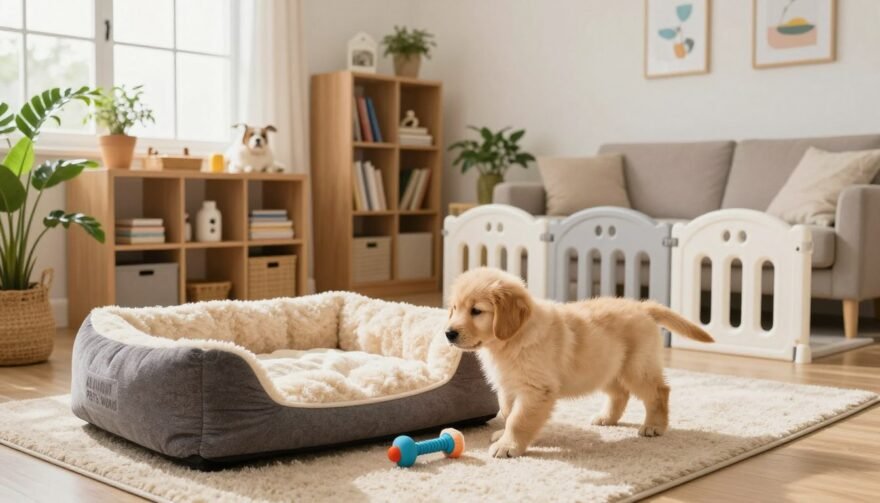
New dog owner guide,  First time dog owner tips,  Puppy proofing home

Puppy Proofing 101: A New Dog Owner’s Guide to a Safe Home

I once treated bringing a puppy home like a stealth mission. I packed toys, treats, and a crate, then realized the real hazard was my living room—cords, houseplants, and a trash can that looked like a buffet.

So I did what any semi-sane human does: I turned the place into a safe den, prioritized calm first days, and stuck to the food the pup knew. Predictable mealtimes and brief potty breaks (age-in-months + 1 hours) became our lifeline.

This is your practical, slightly sarcastic New dog owner guide—not a lecture, but a plan. We’ll cover room-by-room puppy proofing home steps, routines for sleep and alone time, a vet visit within two weeks, and how to use positive reinforcement and boredom-busters so chewing stops being a personality trait.

Hint: think of safety as helpful limits, not Fort Knox. Follow the 3 days, 3 weeks, 3 months curve and your life will normalize faster than you expect.

Key Takeaways

  • Prep the space first: secure trash, cords, and toxic plants.
  • Keep the first days calm and stick to familiar food.
  • Set routines for potty, sleep, and alone time—predictability helps.
  • Book a vet visit within two weeks and start positive reinforcement.
  • Use exercise and mental puzzles to prevent boredom and chewing.

New dog owner guide: Set up your home, supplies, and a safe space

Think of your pup’s first room like a tiny studio: efficient, cozy, and chew-resistant. Pick an area that becomes a clear safe space where meals, naps, and calm happen without a demolition audition.

Create a den with a crate or pen

A properly sized crate or exercise pen acts as a den—cozy, predictable, and low-stimulation. Size it so your pup can stand, turn, and stretch. Add washable bedding and a light cover for den vibes.

Crates aren’t punishment; they support crate training and help anxious pups relax. Keep the den away from heavy foot traffic but not banished to a spooky basement.

safe space

Stock the essentials

  • Bowls for consistent meals and water.
  • ID tags, a sturdy leash or Y-shaped harness, and comfy walking gear.
  • Safe toys for teething—avoid shred-everything or tiny-part items.
  • An enzyme cleaner for accident reality and basic grooming supplies so your pup can get used to handling.

Plan family roles and a realistic schedule

Assign who does morning potty, evening training, and supply restocks. Build a simple schedule with short training bursts, frequent potty breaks, and planned alone time so your pup learns routine without melting down.

Quick win: a designated puppy area plus a crate speeds adjustment. The faster your pet sees that area as predictable, the faster you both get used to the new rhythm.

Puppy proofing home checklist for hazards, chewing, and escape risks

Before your little fluffball learns stairs, they’ll audition for chewing every cord in sight. Start by hunting hazards like a bored detective: cords, meds, trash, and breakables are all suspects.

Electrical cords first: bundle and route cords behind furniture, use cord covers, and tape power strips out of reach. Tuck chargers when not in use so temptation vanishes.

  • Toxin control: lock meds and cleaning supplies, use child-proof latches, and move garage chemicals up high.
  • Choking hazards: clear coins, batteries, and small toys from floors and low shelves.
  • Trash and food: secure trash cans with locking lids and keep counters clear to stop counter-surfing.
  • Plants: remove or block toxic plants (lilies, tulips, rhododendrons, aloe) and swap for pet-safe varieties.
  • Boundaries: baby gates and closed doors create reliable safe zones and cut supervision stress.
  • Outdoor checks: inspect fencing, lock gates, remove standing water, and avoid lawn chemicals.
Risk Action Why it matters Quick tip
Electrical cords Bundle/hide or use covers Prevents burns, shocks, and chew injuries Route behind furniture and unplug unused chargers
Trash cans Lock lids or use secured bins Stops dangerous snacking and obstructions Keep bins in cabinets if possible
Toxic plants & chemicals Remove or fence off; lock chemicals Prevents poisoning and long-term health risks Choose pet-safe plant swaps
Escape risks Check fences; secure gates & pools Reduces runaways and drowning hazards Fix gaps and add childproof latches

Quick note for multi-pet homes: adult dogs still raid trash and chew odd stuff. The same checks protect every curious mouth and tail in your household.

The first days at home: keep it calm and build trust fast

Imagine you’re hosting a quiet guest who needs naps, snacks, and repeated reassurance—that’s your scene for the first few days.

Lower noise and stimulation so your dog doesn’t link the world to anxiety

Calm means minimal visitors, a low TV volume, and short, gentle meet-and-greets. Urban sights and sirens can overwhelm, so keep outings slow and short.

Overstimulation can create long-lasting worry. When a puppy learns the neighborhood equals chaos, that anxiety sticks.

first days puppy

Use the “three days, three weeks, three months” mindset

Think milestones: the initial three days are decompression. The next three weeks are about building a simple routine. By three months, this little family member starts to act like they belong.

  • Keep the pup in one main area and use their safe space for breaks.
  • Make trust deposits: predictable meals, gentle praise, and consistent potty trips.
  • Let your pet choose engagement—don’t force cuddles—especially with kids.

Short-term patience pays off: calm first days reduce stress behaviors and make every next step—training, alone periods, and sleep—easier for both of you.

Routine from day one: potty training, sleep, and alone-time practice

Start a solid daily pattern on day one so your life (and theirs) stops feeling like a chaotic sitcom. A clear routine reduces accidents, helps sleep, and makes training feel doable instead of eternal chaos.

https://www.youtube.com/watch?v=9dwUfJJFDcI

Potty rhythm: frequent breaks, a cue, and immediate rewards

Take the pup out often—about every two hours and after waking, play, meals, and before bed. Use a single cue word, then deliver immediate praise or a tiny treat. Think vending machine: good behavior -> instant reinforcer.

Bedtime basics: calm, last trip, and don’t reward whining

Wind down with a quiet activity, a final potty, then lights out. If whining starts, check real needs calmly; avoid bringing them into bed for attention. That accidentally trains whining into a rewarded behavior.

Crate and independence training

Make the crate inviting: feed meals inside, do short comfortable sessions, and lengthen them slowly. For alone time, provide water, a safe chew or puzzle, and increase minutes in small steps so separation tolerance builds.

Troubleshooting: If your dog whines, verify no urgent need, then ignore attention-seeking noise. Consistency beats loud corrections—steady reinforcement of calm behavior wins every day.

Feeding your new dog: prevent stomach upset and set healthy habits

Food routines are the secret handshake between good sleep and fewer messes.

Keep their current meals, then switch slowly

Start with what they already know for a few days. Sudden changes can cause an upset stomach. If you plan a swap, mix increasing amounts over 7–10 days.

Pick a complete option and avoid kitchen hazards

Choose a complete & balanced dog food from a reputable brand. Keep common toxins—onions, garlic, grapes, xylitol—out of reach and off counters.

Schedule meals to help potty training

Feed on a set schedule so bathroom trips become predictable. Mealtime windows make potty timing easier and cut down on surprise accidents.

FAQ

How do I set up a safe “den” area and start crate training without turning it into a prison?

Create a cozy corner with a properly sized crate or play pen, soft bedding, and a few safe chew toys. Make the crate inviting—feed treats and meals inside, toss in a snuffle toy, and leave the door open for exploration at first. Keep sessions short and fun, build up duration slowly, and never use the crate as punishment. The goal: a calm, predictable retreat where your pup chooses to hang out.

What basic supplies should I buy before bringing the pup home?

Get sturdy food and water bowls, an ID tag and microchip, a comfortable harness and leash, size-appropriate toys, enzymatic cleaner for accidents, grooming basics (brush, nail clippers, shampoo), and a secure crate or pen. Also stock the kitchen with healthy food (or the food they’re used to), and have a vet lined up for the first checkup and vaccines.

How can I plan family roles and a realistic daily schedule?

List daily tasks—feeding, potty breaks, walks, training, play, and alone time—and assign them to household members. Keep a simple timetable: mornings for potty and short walk, midday break if possible, evening training/play, and bedtime routine. Be realistic about work and sleep—consistency beats perfection.

What’s the easiest way to hide electrical cords and chargers so they don’t become chew toys?

Use cord covers, cable management boxes, or zip ties to bundle and run cords along walls. Unplug unused chargers and tuck them away. For high-traffic spots, cover cords with PVC tubing or use furniture to block access. Supervision and redirection to approved chews help reinforce good habits.

Which household items are the top toxins or choking hazards to remove?

Secure medications, cleaning supplies, batteries, human food (chocolate, xylitol), small objects, and breakables. Put these items on high shelves or in locked cabinets. Keep laundry rooms and garages off-limits if possible—those spaces hide a lot of trouble.

How do I stop counter-surfing and protect the trash can?

Use lidded, heavy bins or keep bins in cabinets. Train the “leave it” and “off” cues and reward appropriately. If the pup seems food-motivated, reduce temptations by clearing countertops and storing snacks out of sight. Motion-activated deterrents or a secured trash closet help short-term while training continues.

Which plants are toxic and how do I make the yard safe?

Common toxic plants include lilies (especially for cats, but avoid), sago palm, oleander, and certain philodendrons. Check ASPCA’s list for specifics. Remove or place plants out of reach, supervise outdoor time, secure fencing, eliminate standing water, and avoid harsh lawn chemicals—opt for pet-safe treatments instead.

When should I use baby gates or closed doors versus letting the pup roam free?

Use gates to confine the pup to a safe zone during unsupervised moments, while you puppy-proof other rooms. Closed doors work for full-room off-limits areas. Start small—a kitchen or living room—and expand access as the pup earns trust through calm behavior and reliable housetraining.

How do I check and secure outdoor fencing to prevent escapes?

Walk the perimeter looking for gaps, loose panels, or places to dig. Bury fencing a few inches to deter digging or add a dig-proof barrier. For jumpers, increase fence height or add an inward-facing extension. Regular maintenance—tighten posts, replace damaged sections—keeps things secure.

What should I do during the first days at home so the pup doesn’t get overwhelmed?

Keep noise and guest traffic low, avoid long outings, and limit new experiences to short, positive encounters. Offer a predictable routine for meals, potty, and naps. Lots of calm praise and gentle handling helps build trust fast—think low-key Netflix-and-chill, not opening-night Vegas.

What is the “three days, three weeks, three months” rule?

Expect immediate relief or bonding in the first three days, noticeable routine and basic training progress in about three weeks, and lasting habit changes and socialization outcomes by three months. It’s a useful mindset for patience—don’t expect instant perfection, but expect steady improvement.

How do I start potty training with a consistent routine?

Take the pup out first thing, after meals, after naps, and before bedtime. Use a consistent cue (like “go potty”), reward successes immediately, and keep outings short and focused. Track accidents to adjust timing. Consistency and timing are the secret sauce—plus patience and enzyme cleaner for the inevitable oopses.

What are simple bedtime routines that reduce whining and accidental reinforcement?

Wind down with calm play or a short cuddle, a final potty break, and a predictable spot for sleep (crate or bed). Ignore attention-seeking whines after ensuring needs are met—reward quiet behavior instead. A consistent bedtime cue (soft music, dim lights) helps signal it’s sleep time.

How do I build positive crate and bed associations?

Feed meals in the crate, drop in high-value treats, and use stuffed Kongs or safe puzzle toys during crate time. Keep sessions short and upbeat at first, then lengthen them. Praise calm behavior and avoid forcing the pup in. The crate should equal comfort, not confinement.

How do I teach independence and increase alone time without causing separation anxiety?

Start with very short absences—step out for a minute, then return—and gradually extend time away. Give a safe chew or puzzle to occupy the pup, and practice leaving without fanfare. Build confidence with calm, predictable departures and arrivals; dramatic goodbyes and greetings amplify anxiety.

Should I change the pup’s food when they arrive, and how fast should transitions happen?

Keep their current diet for the first week to avoid stomach upset, then transition slowly over 7–10 days if you switch brands. Mix increasing amounts of the new food into the old. Watch for diarrhea or vomiting—if that appears, slow the transition or consult your veterinarian.

What should I look for when choosing a balanced food and what human foods are toxic?

Pick a diet labeled “complete & balanced” from reputable brands like Royal Canin, Hill’s Science Diet, or Purina Pro Plan. Avoid feeding chocolate, onions, garlic, grapes, raisins, xylitol-sweetened items, and high-fat scraps. When in doubt, Google ASPCA toxic foods or call your vet.

How should mealtime timing support potty training and reduce accidents?

Feed on a schedule—two to three set meals depending on age—and take potty breaks 10–20 minutes after eating. Predictable digestion helps you anticipate bathroom needs, which speeds up housetraining. Free-feeding makes timing impossible, so avoid it for younger pups.

Any quick grooming and health tips for new caretakers?

Brush regularly to reduce shedding and skin issues, trim nails every few weeks, clean ears when they look dirty, and bathe only as needed. Book an initial vet visit for vaccines, deworming, and a microchip check. Keep records and ask your vet about flea/tick and heartworm prevention.

How much exercise and mental stimulation does a young pup need?

Short, frequent play sessions and gentle walks tailored to age and breed. Mental tasks—basic training, puzzle toys, sniff games—tire them out faster than nonstop fetch. Don’t overdo physical exercise for very young pups; steady, moderate activity prevents joint problems and behavioral issues.

What are fast ways to teach basic commands like sit, stay, and come?

Use short, high-value training sessions (5–10 minutes), positive reinforcement, and clear cues. Reward immediate compliance with treats and praise. Practice often in low-distraction places first, then generalize commands to different rooms and outdoor settings.

How do I puppy-proof rooms quickly when I have limited time?

Walk each room eye-level to spot hazards, tuck cords, move breakables out of reach, secure trash, and close off risky areas with gates. Stow tempting shoes and remote controls. If you’re in a rush, create a single safe zone with the essentials and a sturdy playpen until you can finish proofing.

When should I call the vet—what counts as an emergency?

Call the vet for persistent vomiting, diarrhea with lethargy, difficulty breathing, severe bleeding, suspected poisoning, or if the pup won’t stand or eat. For anything that feels urgent, err on the side of caution—it’s better to get a quick professional opinion than to guess.
Avatar photo
Author: Michael Carter