
I once tried to take out the trash and ended up escorting a fluffy shadow to the curb. It sat like a tiny parole officer until I returned, and I laughed nervously while thinking, “Is this sweet or a red flag?”
Most of the time this is normal pack behavior. Dogs see humans as leaders, safety, and snacks. Puppies imprint fast and Velcro dogs double down on closeness. That said, constant trailing can trip you up or hint at boredom and stress.
Good news: we can keep the warm, social bond while building healthy independence. I’ll show simple steps: training basics, play and brain games, changing what gets rewarded, and solo-time wins (hello, stuffed KONG).
If clinginess appears suddenly or your pup panics when alone, check with a vet or a trainer. No guilt: tiny tweaks, not a life sentence.
Key Takeaways
- Following is mostly normal packing behavior for dogs.
- Positive rewards can strengthen clingy habits.
- Use exercise and enrichment to reduce constant trailing.
- Train calm independence with routine and limits.
- Seek vet or pro help for sudden or severe distress.
Why does my dog follow me everywhere? Understanding normal “Velcro dog” behavior vs. dog separation anxiety
Some pups trail you like a tiny personal assistant, eyes locked on whatever you do next. That closeness often comes from simple instincts: dogs are social animals and you are the center of their small world.
Pack mentality and bonding: why dogs stick close to their people
Dogs evolved as pack animals, so when there’s no canine crew, you become the meeting spot (lucky you). Puppies imprint and treat owners like a caregiver. This creates calm, secure attachment rather than panic.
Safety, affection, and trust: your role as “home base”
Many pups follow because you equal safety and affection. You are routine, predictability, and comfort all rolled into one. That’s normal bonding, not a problem — unless leaving triggers intense distress.
Curiosity and fear of missing out on household routines
Movement signals potential fun: food, walks, or attention. Dogs learn fast that sticking close pays off (treats, petting, or the good TV spot). Sometimes it’s simple FOMO, not panic.
- Quick gut check: chills when you close a door = normal.
- Vocalizing, panting, pacing within minutes of departure = possible anxiety.
| Behavior | Common cause | Red flag? |
|---|---|---|
| Calm trailing | Bonding, routine cues | No |
| Following for treats/attention | Positive reinforcement | No (trainable) |
| Vocalizing when left | Panic on separation | Yes |
“Think of closeness as comfort until the emotional tone shifts to panic.”
Next up: we’ll explore the everyday reasons pups shadow you and the clear signs that more help is needed.
The most common reasons dogs follow their owners around the house
Sometimes your pet sticks close simply because that closeness has been wildly successful before. Positive attention, tasty rewards, or a quick ear-scratch teach a simple lesson: it works. Positive reinforcement builds habits fast.
Positive reinforcement: attention, food, treats, and “it works” learning
If following reliably yields food, treats, or cuddles, the behavior becomes a loop. Think of yourself as a one-person vending machine: press the gaze, out pops a reward. Break the loop by rewarding calm distance instead.
Routine cues: meal times, walks, and anticipating what happens next
Dogs are great pattern detectors. Shoes on = walk. Cabinet noise = food. Those cues teach dogs to monitor you for the next event. Change signals or add neutral actions to reduce automatic shadowing.
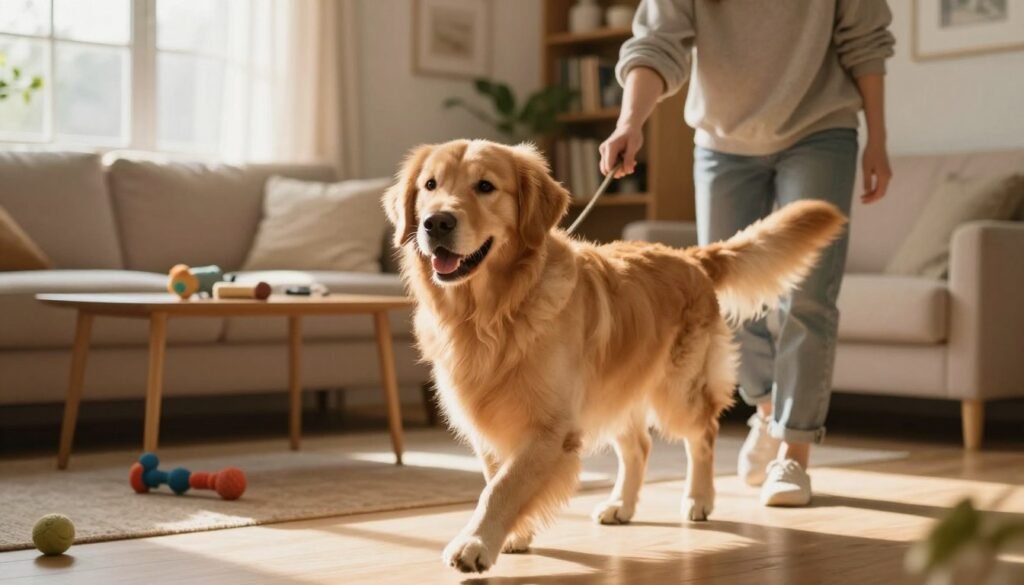
Boredom and excess energy: following as a self-made activity
Sometimes trailing is a pastime. No toys, no puzzle feeders, no walk? Following around fills time. Mental stimulation and extra exercise steer restless energy into better outlets.
Breed tendencies: companion and working dogs that prefer staying by your side
Certain breeds are wired to watch and work with people. Companion and herding lines often prefer your side. That’s natural, not naughty—though it can be managed with focused training and enrichment.
- Quick tips: rotate toys, use food puzzles, scatter-feed kibble, and create a comfy bed station to encourage settling.
- Following becomes a problem only when it invades space, creates safety risks, or escalates into distress.
Sometimes one person becomes the snack economy—coming up next: why that favorite shows up on every route through the house.
Why your dog follows one person more than others
Sometimes a single household member becomes the shortcut to every good thing under the roof.
The “gateway to good things” effect
Think of the chosen person as the household’s vending machine. If that person fills bowls, hands out treats, and leads walks, the pup learns fast which human controls reward time.
Primary caregiver vs. the fun-time human
One person may handle training, departures, and routine care. Another might be the playful, snack-giving sidekick. Either role can create strong attachment.
| Role | Typical actions | How attachment forms |
|---|---|---|
| Primary caregiver | Feeding, vet visits, training | Predictability builds trust |
| Fun-time human | Play, treats, attention | Positive rewards create preference |
| Shared duties | Rotated walks, feeding, departures | Broadens the pup’s social base |
Rescue history and risk factors
Rescue pups may carry fear of loss from past moves. That history can make a dog might cling tighter to one person.
Tip: Spread feeding, walks, and calm departures among family members to reduce single-person dependence and lower the chance dogs separation anxiety becomes a problem.
“Share the job; the pup gets varied anchors, and you get your personal space back.”
Why your bathroom becomes prime real estate (and other household hotspots)
Bathrooms turn into curiosity magnets—intense smells, trash treasures, and prime people-watching.

Yes, privacy is negotiable. A bathroom concentrates scents that tell your pet who visited, what they ate, and what smells new. That smell buffet is irresistible.
Small spaces, big curiosity
Closed doors and tight rooms trigger maximum FOMO. If you’ve been following around the rest of the house, the bathroom is no exception.
Items like wastebaskets, towels, or toiletries offer novel targets for inspection.
Underfoot hazards and simple boundaries
Doorway shadowing in narrow halls is a real trip hazard. Cute paw placement can become an urgent-care moment fast.
Quick fixes:
- Teach a brief pause at thresholds with a “wait” or “place” cue.
- Use a baby gate or cue a mat outside the bathroom for calm settling.
- Swap high-value toy or chew during wash-up to change the payoff.
We’re not shaming the bathroom buddy — just preventing accidental soccer kicks and stress spirals.
When following becomes a red flag: signs your dog may be anxious or unwell
A sudden shift from independent snoozer to constant companion is a signal worth noticing. That change can point to medical issues, stress, or plain old restlessness.
- Clinginess is sudden, intense, or paired with new whining, pacing, or restlessness.
- Changes in appetite, sleep, toileting accidents, or limping show up at the same time.
- If behaviors spike mainly when you leave, we may be past clinginess and into true dog anxiety.
Don’t DIY everything. A prompt visit to a veterinarian can rule out pain, vision or hearing loss, and illness. These physical factors often explain abrupt shifts in behavior.
Senior considerations: Older dogs might lose sight or hearing, develop joint pain, or show cognitive changes. That can make an independent pet suddenly seek constant reassurance.
Newly adopted dogs: Transition time is stressful. New pups or rescues often shadow people while they learn routines and feel safe. That’s normal, but patience and consistent structure help.
“Sudden changes are worth a pro check — medical or behavioral — so you get the right help fast.”
If signs persist, consult a qualified dog trainer or behavior professional. A trainer plus veterinary guidance gives the best chance to ease fear without reinforcing it.
Dog separation anxiety: symptoms, triggers, and what’s really happening
If your house turns into a one-dog vigil the moment you shut a door, something deeper may be driving that behavior.
Separation anxiety is panic tied to being away from the attachment figure — not spite, not revenge, and certainly not a personal vendetta against your drywall.
Distress when left alone
Look for loud, persistent barking or howling, often within minutes of your exit. Pacing in fixed patterns, drooling, trembling, and frantic energy are classic signs.
Destruction and escape attempts
Dogs may chew doors, dig at windows, or hurt themselves trying to escape. This damage is fear-driven, not naughty behavior.
House soiling and confusing messes
Accidents can come from panic, but similar incidents may be medical or training-related. Urine marking, incontinence, or excitement peeing need a vet check before punishment.
Common triggers
- Schedule changes (new work hours)
- Moving house or sudden household changes
- Rehoming or loss of a caregiver
Problems to rule out first
Always rule out medical causes: urinary tract infection, diabetes, kidney issues, Cushing’s, neurological problems, or medication side effects. Boredom and incomplete house training can mimic this set of behaviors.
“Mild cases often improve with counterconditioning; moderate or severe cases usually need a structured plan and professional help.”
| Problem | Common sign | Next step |
|---|---|---|
| Separation panic | Barking, pacing, escape attempts | Behavior plan + trainer |
| Medical issue | Sudden accidents, increased thirst | Veterinary exam |
| Boredom or training gap | Chewing, sporadic barking | More exercise and enrichment |
Short version: spot the panic, check the vet, then get a consistent, gradual plan. You’ll need patience, practical tools, and often professional help to turn panic into calm.
How to help a dog who follows you everywhere without reinforcing clingy behavior
You can teach calm independence and still get the same cuddles—on your terms. Start with short, clear training steps that make staying away feel rewarding, not scary.
Build skills: “place,” “stay,” and settling on a bed
Teach a reliable place cue and reward your pup for staying on a bed. Begin with seconds, then add time. Reward calm distance with a treat or praise so your pet learns the quiet option pays.
More brain work and exercise
Daily exercise plus short puzzle sessions cut boredom that fuels following around. Snuffle mats, scent games, and quick training rounds make toys and tasks the go-to entertainment.
Change the payoff and share responsibility
Stop handing out constant attention. Give rewards for calm, not clingy behavior. Rotate feeding, walks, and play among household members so one owner isn’t the only portal to treats and fun.
Counterconditioning, departures, and management
Only give special food-stuffed puzzle toys or a KONG at exit, and remove them on return. Practice tiny departures (seconds to minutes) and keep hellos low-key. While you train, consider daycare, a sitter, or safe confinement—crates help some and stress others.
Tip: If progress stalls, a certified trainer or behavior pro can speed things up and prevent common mistakes.
Conclusion
Most tails that trail you are simply a compliment — your pup thinks you run the show. In short: following is usually normal bonding, routine, and plain old affection. If you asked “why does my dog follow me everywhere,” the answer is often that simple.
That said, boredom or separation anxiety can change peaceful shadowing into panic. Watch for sudden shifts, loud distress, or accidents when left alone.
Next steps: teach a reliable place cue, add enrichment and exercise, and reward calm distance. If behavior appears suddenly or is severe, contact a veterinarian or certified trainer for a plan.
Keep the bond. Build confidence. The goal isn’t to erase closeness — it’s to stop panic and keep the cuddles happy and calm.
