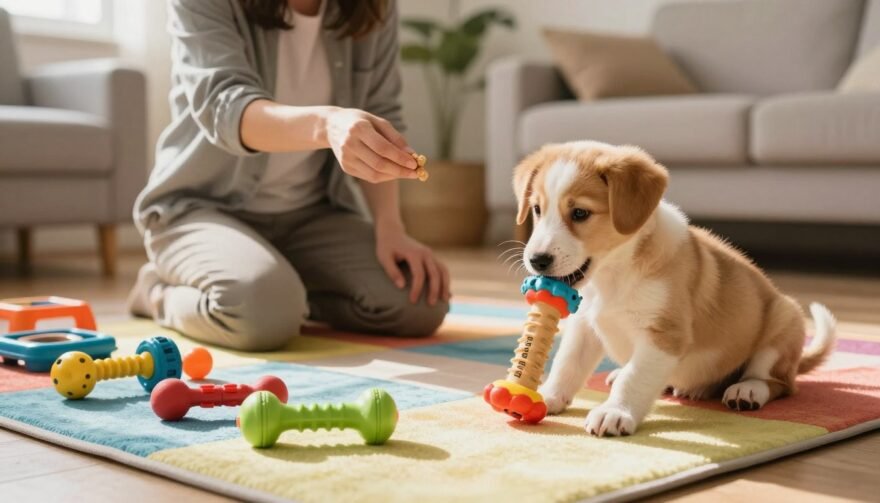
I once treated my couch like a chew toy. Within a week of bringing home a little troublemaker, the armrest looked like modern art. That taught me fast: chewing is normal for puppies and dogs, especially during teething and when they are bored or seeking attention.
So here’s the game plan—without becoming a drill sergeant. First, manage the environment so your stuff isn’t an open buffet. Then, offer clear alternatives like rotated toys and supervised chew sessions.
I’ll show you how to stop puppy from chewing by guiding choices, not by scolding after the fact. Expect simple, humane puppy training tips, practical chewing solutions for real life, and safety basics so your home and furniture stay intact.
Key Takeaways
- Chewing is normal: It eases teething and fights boredom.
- Protect the space: Puppy-proof your home and remove temptations.
- Give good options: Rotate safe toys and supervise play.
- Redirect & reward: Calmly guide the dog to allowed items.
- Be consistent: Rules + exercise + mental work win over time.
Why Puppies Chew: Understanding Puppy Behavior (Teething, Curiosity, Play)
Chewing isn’t mischief—it’s how a young dog learns about the world.
I’ll be blunt: most chewing is normal. Puppies teethe hard between about 12 weeks and 6 months. That window brings 28 baby teeth, then about 42 adult teeth pushing in. It hurts, so your pup looks for relief by gnawing.
Teething timeline and what to expect
Expect spike in interest in soft shoes, chair legs, and random objects during those months. Chewing soothes sore gums and helps new teeth break through.
How they explore the world
Puppies use mouths the way we use hands. Texture, taste, weight, and movement make ordinary items irresistible.
Play, attention, boredom, and anxiety
Some nibbling is play. Some is attention-seeking—if you overreact, you reward the act with drama (and that’s not the plan).
| Cause | Signs | Quick fix |
|---|---|---|
| Teething | Sore gums, lots of mouthing | Frozen safe chew, rotate toys |
| Curiosity | Mouths new objects | Offer alternatives, supervise |
| Boredom / Anxiety | Repeated chewing when ignored | Exercise, puzzle toys, calm routines |
Takeaway: once you understand why dogs chew, guiding that behavior gets simpler—meet the need, then shape the habit with patience, not punishment.
Stop puppy from chewing by setting up your home for success
Think of your home as a no-chew zone with a few smart concessions. You can make the right choice the easy choice and save your furniture and sanity.
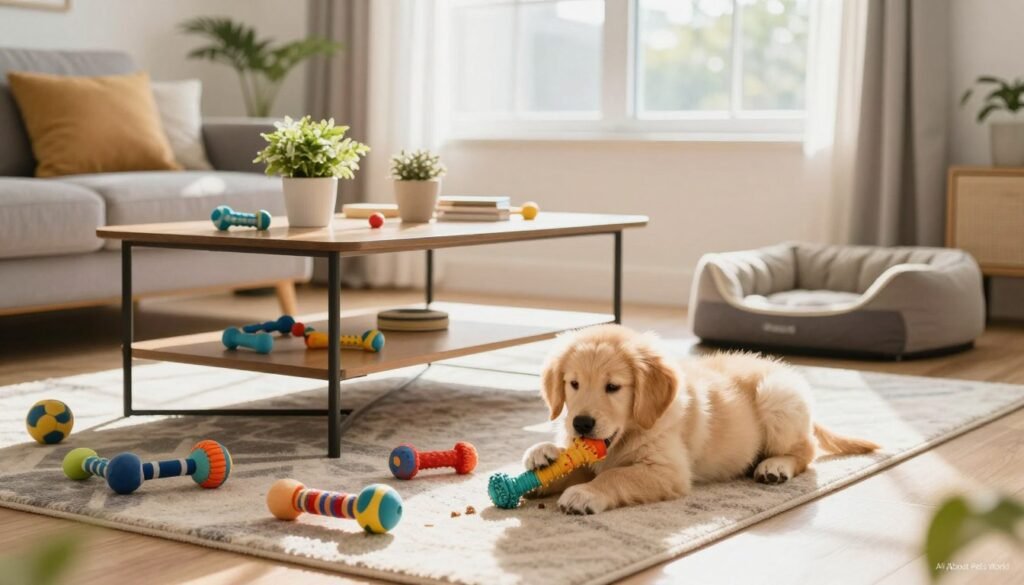
Puppy-proofing basics
Make sure valuables are out of reach: shoes in closets, laundry in hampers, and books on shelves. Hide tempting items so your dog can’t practice bad habits.
Block cords, tuck wires behind furniture, and anchor loose cords. That simple move protects both gadgets and teeth.
Create a safe area for unsupervised time
Use a crate, a gated corner, or a small pen to give your dog a comfy “yes” area when you can’t watch. Include water, a soft bed, a sturdy rope toy, and a rotation of safe toys.
Crate time should feel like rest, not punishment. Short, positive sessions help dogs accept confinement when you need a hands-off moment.
Supervision strategy during waking hours
Watch closely while your dog explores. Every success — choosing a toy over furniture — builds the habit you want.
If you can’t supervise, move them to the safe area. Prevention is training: your household items don’t learn, the dog does.
| Risk zone | What to do | Quick items to include |
|---|---|---|
| Cords & electronics | Bundle, hide, or cover cords; use cord protectors | Power covers, cord clips, cord-shortening |
| Shoes & laundry | Store in closed closets or high shelves | Hamper with lid, closet hooks |
| Furniture & low tables | Block access temporarily; offer chew alternatives | Gates, slipcovers, durable toys |
| Kids’ rooms & small objects | Close doors; pick up small things after play | Toy bins with lids, childproof latches |
Chewing solutions: Choosing safe chew toys and rotating them
Good chew choices are the secret weapon you didn’t know you needed. Pick a chew toy that fits the mouth: too small is a swallow risk; too hard risks chipped teeth. Make sure texture is interesting — rubber, braided rope, and soft nylon each serve a purpose.
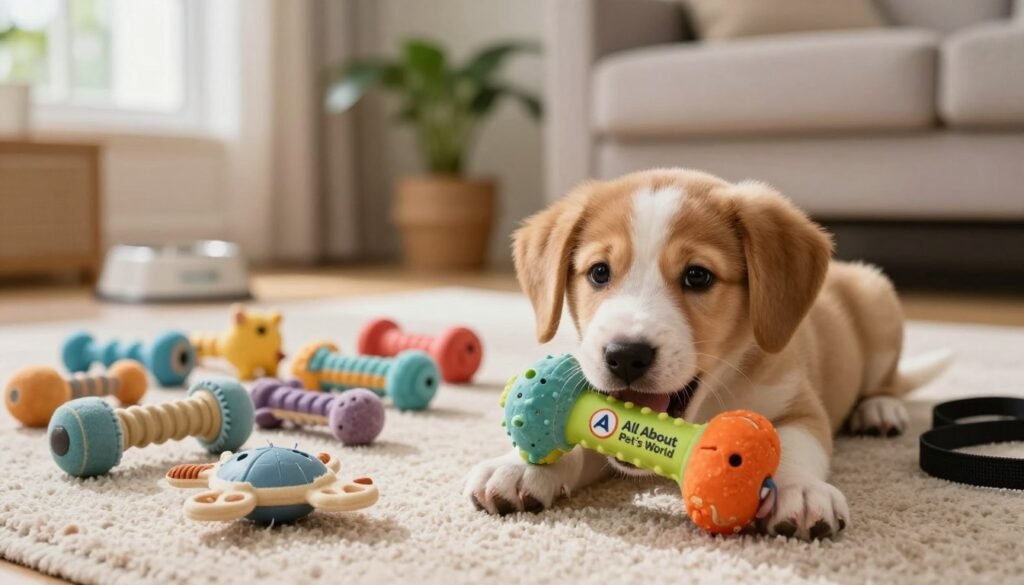
What to look for in a chew toy
Size, texture, and durability matter most. Choose toys that can’t be swallowed, feel satisfying to gnaw, and hold up without breaking into shards. Rotate tougher toys in with softer ones so teeth and gums get variety.
Rotation plan to keep toys fresh
Swap toys every couple of days. Keep half in storage and rotate them into circulation. That way one toy feels new again — no toy industrial complex required.
Edible chews and supervision
Edible chews (bully sticks, safe dried chews) need eyes-on time. Supervise to reduce choking and separate dogs during chew sessions to avoid gulping or fights.
Safety rules and teething relief
Never give cooked bones — splinters are a real vet bill. Avoid chews harder than your dog’s teeth to prevent fractures. For teething, offer frozen KONG-style toys, ice cubes, or a frozen damp washcloth to soothe sore gums.
| Type | Best for | Safety note |
|---|---|---|
| Rubber KONG-style | Durability, treat stuffing | Inspect for damage; replace if torn |
| Braided rope | Texture, tug play | Discard when fraying to avoid ingestion |
| Soft nylon/thermoplastic chews | Teething, gentle chewing | Avoid ultra-hard formulas that can chip teeth |
| Edible chews (bully sticks) | Long-lasting, highly rewarding | Only while supervised; separate dogs |
Puppy training tips to redirect chewing without punishment
Let’s fix the mess gently—no drama, just clear direction. When your pup grabs the wrong object, act fast and calm. Quick redirection teaches choice, not fear.
How to interrupt and divert calmly
Say a short cue like “Uh-oh” or a soft noise to interrupt. Remove the item without yelling.
Then hand over an allowed chew and praise the swap. Keep your voice upbeat — you want attention to reward, not punish.
Reward-based redirection
Make the right choice fun. Praise lavishly when your pup picks the toy. Treats, play, or a silly voice help the new habit stick.
Consistent rewards turn good choices into preferred choices. That’s the whole trick.
Teaching “drop it” with trades
Use trades: offer a better toy or a tasty treat and say “drop it.” Swap, reward, and repeat.
This avoids keep-away games and builds trust. The trade should feel like a win for your dog every time.
Consistency rules
Avoid confusing messages. Don’t let old shoes be allowed one day and forbidden the next.
Clear, steady rules speed progress. If you want to stop puppy chewing, make the right objects always available and always rewarding.
“Teach what to do, not what not to do.” — Simple, effective, and kinder on both of you.
Exercise and mental stimulation to reduce boredom-related chewing
A wired-up dog is often just an underworked brain and body in disguise. Give both a job and you’ll see fewer wrecked socks and more calm downtime.
Daily physical options that actually tire them out
Regular walks, fetch, tug, and off-leash sniff time are simple ways to burn energy. For apartment life, swap long walks for brisk neighborhood laps and short play sessions.
Backyard-friendly routines lean on repeated fetch, chase games, and supervised playdates with friendly dogs. Make sure sessions are consistent so energy doesn’t build up.
Mental stimulation ideas that beat boredom
Short training games, snuffle mats, and food puzzle toys keep a pup’s brain busy. Rotate puzzles and vary treats to keep the stimulation fresh.
Feed a meal in a puzzle now and then. It’s an easy way to add calm, productive time to the daily routine.
Socialization, timing, and when anxiety is the real issue
Early social visits with people and other dogs prevent frustration that turns into destructive habits. Socialization gives plenty of emotional outlet for curious pups.
Identify high-risk times (late afternoon, right before bed) and schedule a game or puzzle then. If chewing spikes with alone time plus pacing or whining, separation anxiety is likely and needs a different plan.
“A tired body and a busy brain are the best deterrents to household chaos.”
Deterrents, management tools, and chew-proofing techniques that actually help
You can use clever tools to guard your gear without turning into the household villain. Small management moves give you breathing room while you teach better choices.
Bitter sprays and taste deterrents: how to use them correctly and consistently
Think of sprays like training wheels: helpful, not a personality makeover. First, dab a tiny amount on a tissue and let the dog taste it once so the flavor is familiar and they can spit it out.
Then treat the target object. Reapply daily for 2–4 weeks so the message sticks. Always pair the deterrent with an allowed chew nearby so the swap feels like a win.
Environmental aversives that don’t harm your bond (tape, covers, motion tools)
Sticky tape, plastic corner covers, and motion-activated devices create a “nope” that comes from the object — not you. Use them on table legs, couch arms, and cords.
Rotate barriers and keep interactions calm. Praise choices and never yell; you want the object to be dull, not your relationship.
Crate and confinement guidelines: preventing destruction without over-crating
Use a crate, gated room, or pen when you can’t supervise. Aim for short stints; adult dogs shouldn’t be left crated more than about six hours at a stretch.
Combine safe confinement with exercise and puzzles so time alone isn’t just boredom time. Tools help, but consistent supervision and rewarding the right picks fix the habit.
| Tool | How to use | Best use case |
|---|---|---|
| Bitter spray | Dab on tissue first, then spray; reapply daily 2–4 weeks | Small furniture, shoes |
| Sticky tape / covers | Apply to edges or legs; replace when worn | Table legs, couch corners |
| Motion deterrent | Place near target; pair with praise for correct item | Open shelves, entryways |
| Crate / gated area | Short periods only; add toys and water | Unsupervised time, naps |
“Tools support training — they don’t replace it.”
Conclusion
Let’s wrap this up with a realistic, no-nonsense plan you can actually use. Chewing is normal — your dog and your puppy are exploring, soothing teething gums, and testing the rules.
Make sure the home is managed, give rotated, safe chew options, and calmly redirect then reward when they pick the right thing. Consistency beats theatrics; dogs learn what works, not what you yelled about yesterday.
Give plenty of exercise and mental stimulation so boredom doesn’t drive the issue. Expect improvement as teething eases (often by six months), but seek help if anxiety or compulsive patterns persist — separation anxiety needs a pro.
Stay patient, keep supervision tight, and celebrate small wins. With steady guidance your dog will grow out of most habits, and you’ll actually enjoy the fun parts of puppyhood again.
