
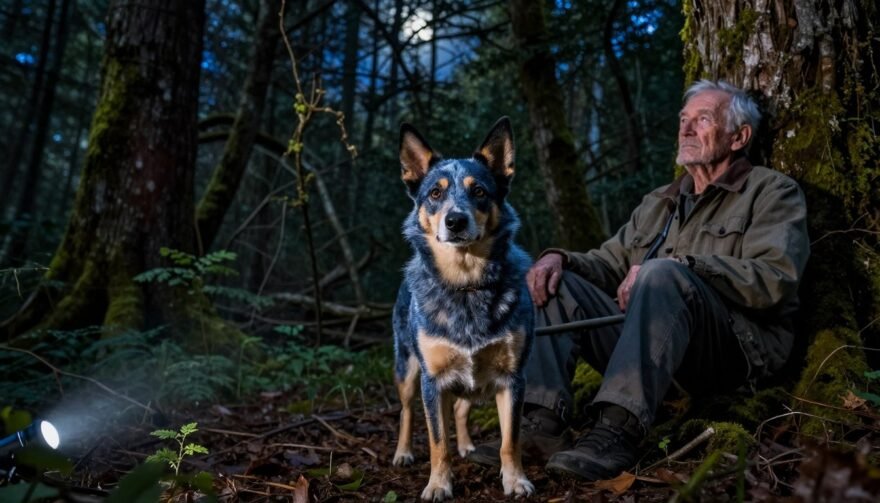
How is this real life? An 82-year-old woman got lost overnight near Elmira, Oregon, and her Blue Heeler, Cami, basically said, “Not on my watch.”
Picture this: cold night, dark trees, and two figures huddled for warmth. Cami stayed pressed close, sharing body heat and calm. That quiet presence likely slowed hypothermia and bought time until help arrived.
The rescue reads like the kind of headline you click on between coffee and doomscrolling: a short video showed barking that guided searchers through dense terrain. This is one of those rare moments where instinct, breed traits, and plain human-animal attachment meet and make a difference.
She wasn’t a certified search team member with a vest. No LinkedIn for this hero—just smarts, endurance, and a refusal to leave her person. Over the rest of the article I’ll walk you through the search, how rescuers found them, why hypothermia matters, and what this tale says about Australian Cattle Dogs in real emergencies.
Key Takeaways
- Cami’s presence likely reduced hypothermia risk by providing warmth and calm.
- A barking response helped rescuers locate the pair in dense woods.
- The event highlights natural breed traits, not formal training.
- You’ll learn how searches work and why quick action matters.
- Practical safety tips will follow to help prevent similar emergencies.
What happened near Elmira, Oregon, when an 82-year-old woman went missing
One moment she was heading toward home; the next, she was nowhere to be seen as darkness fell. Neighbors told officials she left the house that day and never returned to the familiar street.
The initial missing-person report flagged immediate concern because an older adult alone in the woods is never a “wait and see” case. In short order family and neighbors went from “maybe they took the long way” to calling for help.
Lane County’s terrain there is what I call nature’s obstacle course: thick brush, low sight lines, and uneven ground that hides trip hazards. As the hour passed, temperatures dropped and visibility tanked, making simple decisions harder and batteries less reliable.
Hours matter. Cold makes people slow and confused. That’s why search teams treat overnight exposure as the real threat, not just an inconvenience.
- Initial risk: older adult missing in wooded area near Elmira.
- Escalation: darkness, falling temps, and dense brush within an hour(s).
- Why act fast: overnight exposure can quickly become life-threatening.
How Cami stayed with her owner through the night
Night fell fast, and Cami chose to plant herself like a warm little anchor. She stayed pressed close, sharing body heat and a steady presence as temperatures dropped.
Pressing close to share body heat
That physical closeness mattered. Being snug together slows heat loss and can delay hypothermia. In practical terms, that meant the woman stayed more alert and used less energy than if she’d been alone.
Calm companionship that reduced panic
Calm matters. Panic drains warmth and makes people move wildly—exactly what you don’t want in low temps. Cami’s steady breathing and contact kept the pace slow and the mind clearer.
“She stayed. That simple choice likely bought time and kept things from getting worse.”
- Close contact = shared warmth like a living blanket.
- Calm presence reduces frantic movement and conserves energy.
- Staying put can be a survival decision, not just sentiment.
| Factor | Effect Overnight | Why It Helps |
|---|---|---|
| Body heat sharing | Slows core temperature drop | Reduces hypothermia risk |
| Calm companionship | Less panic, fewer risky moves | Conserves energy and clarity |
| Decision to stay | Maintains location for rescuers | Makes finding them easier |
Lane County Sheriff’s Office search efforts in the woods
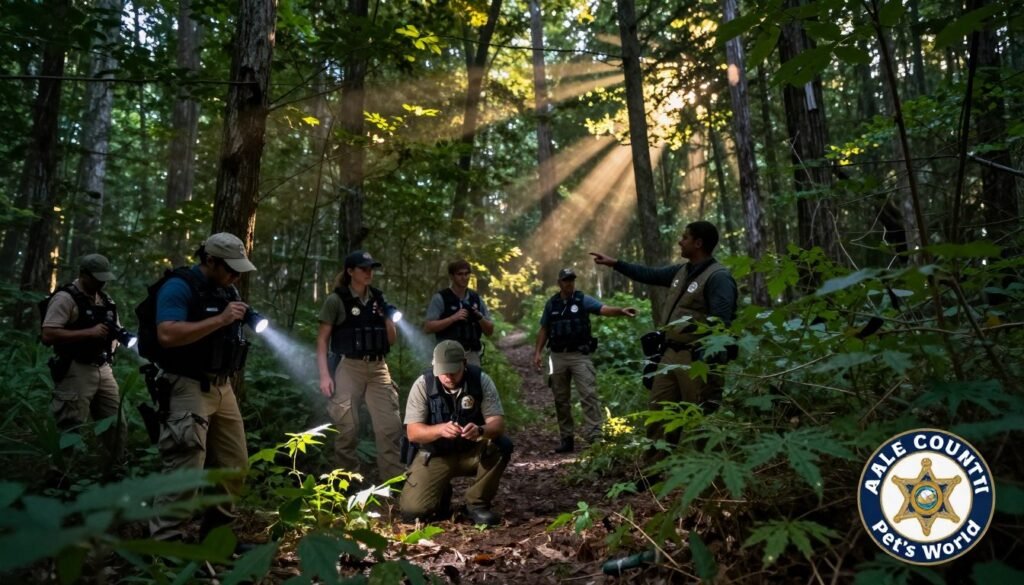
Flashlights, clipped radios, and tired boots became the real stars as the Lane County team spread out into the trees. This was practical work: the county sheriff office coordinating positions, crews calling grid lines, and police units standing by to relay radio traffic.
Challenges for searchers navigating thick brush and low visibility
Thick brush, fallen logs, and steep, unmarked ground turned the night into an obstacle course. Low visibility meant every step needed care; what looks flat from the trail often isn’t.
That rugged terrain slows teams and eats time. Searchers rely on sound, light cones, and careful area-clearing—no Hollywood rope swings here.
Why time matters in cold-weather missing-person calls
Cold exposure is the clock you can feel ticking. The sheriff and police responders know minutes count because older bodies lose heat faster and confusion sets in sooner.
Coordination mattered: call-outs, mapped coverage, and listening posts. And then, like a stage cue, a sound can cut through the dark and change everything.
“There’s no dramatic spotlight—just flashlights and a lot of ‘did you hear that?’”
How rescuers found them: Cami’s barking and response to call-outs
What broke the night wasn’t a spotlight or a radio — it was one clear, purposeful bark. I watched the team switch from sweeping with lights to listening like kids playing Marco Polo.
The normally quiet Blue Heeler who barked “just enough”
Cami is usually calm, so when she answered a call-out it felt deliberate. That short reply was the opposite of frantic: a focused “over here” that cut through the brush.
Using sound cues to pinpoint a location in rugged terrain
In thick woods, hearing often beats seeing. Teams used repeated call-outs, noted echo differences, then moved to where the bark sounded strongest.
The moment searchers were guided to the pair
Triangulation was simple and effective:
- Call, listen, mark bearing.
- Repeat from another spot, close the angle.
- Approach slowly to avoid spooking the pair.
They even found a dog lead nearby as they closed. The sheriff office posted short footage of the find, and some clips look like bodycam footage that helps teach search techniques. Later, the office posted fuller footage to share lessons and celebrate the outcome.
“A few yards and a bark later, the searchers were standing over them — alive and guided home.”
Why this matters medically: hypothermia risk for seniors outdoors
Cold nights turn simple slips into medical emergencies faster than you think. Your body loses heat faster than it can make it, and systems begin to slow down — thinking, moving, even breathing can be affected.
How shared warmth can slow the onset of hypothermia
Shared warmth is basic physics and basic care. Close contact reduces heat loss. That means core temperature drops more slowly and vital organs hold on longer.
In this case, that extra warmth could literally buy rescuers time to come help. It isn’t magic; it’s warmth, stability, and fewer frantic movements.
Exposure, fatigue, and disorientation in older adults
Older people have a harder time regulating temperature. Years of wear, medication effects, and lower muscle mass make heat production tougher.
When someone is cold and tired, judgment blurs. Simple choices — stay put or walk — become risky. That’s why responders race the clock in cold-weather calls.
“If you’ve ever been cold and cranky, imagine that — plus darkness — plus uneven ground.”
- Plain explanation: Hypothermia = body loses heat faster than it can replace it; systems fail.
- Seniors at risk: Temperature control and mobility decline with years; recovery takes longer.
- Cami factor: Close contact reduces heat loss and steadies breathing, buying crucial time.
| Factor | Immediate Effect | What Rescuers Want |
|---|---|---|
| Shared warmth | Slows core temp drop | Keep pair still and warm until help arrives |
| Fatigue | Poor decision-making | Stabilize, avoid unnecessary movement |
| Disorientation | Higher injury risk | Use sound-based searches and careful approach |
Takeaway: This was not just a sweet scene — it was a plausible, physiological advantage. The presence of a calm companion likely changed the night from fatal to fixable.
Australian Cattle Dog traits that show up in real emergencies
Cami’s behavior that night fits a clear pattern in her breed: intense focus on one human and nonstop energy.
Strong attachment and protective instinct
These dogs often bond deeply to a single person. That one-person focus can become protectiveness when the person is in trouble. In Cami’s case, that meant staying close and answering calls instead of wandering off.
High intelligence and problem-solving
Smart looks like practical choices. Staying put, listening to voices, and conserving warmth are small decisions that add up. That kind of thinking helps a lost pair hold position until help arrives.
Physical endurance and working-dog grit
Built for long days, these dogs have stamina and drive. That engine under the hood matters when a cold night drags on and simple movement costs precious heat.
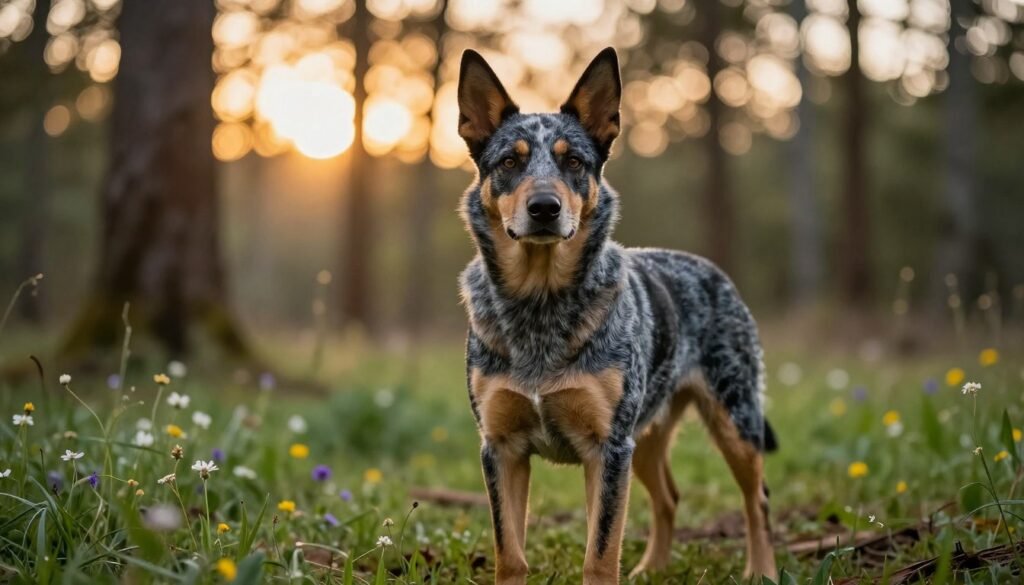
- Quick primer: smart, intense, devoted, and tireless.
- One-person bond often turns into protective action.
- Problem-solving shows up as calm, efficient behavior.
- Endurance makes surviving long, cold hours more likely.
“If you’ve met a Heeler, you know they’re basically project managers in fur.”
None of this guarantees a rescue—these animals aren’t superheroes on demand—but instinct plus a tight bond can be enough. Next up: how natural instincts can work without formal training.
No formal rescue training, but strong instincts did the work
No rescue badge hung on Cami’s collar — just instincts honed by generations of work.
Australian Cattle Dogs were bred to stay close and read human cues. That focus makes them watchful partners who notice small changes in breathing, stance, or tone.
Working-dog genetics: bred to stay close and read human cues
They watch you. A working-line pup tracks movement and mood, then acts if something is off. That watchfulness is practical, not dramatic.
Why “untrained” dogs can still make life-saving decisions
Untrained instincts can be enough: stay close, share warmth, answer a voice. Those simple acts add up.
- Cue-reading: quick reactions to stress or silence.
- Practical loyalty: staying put makes finding easier.
- Survival math: warmth + calm + being findable = higher odds.
I’ll admit I panic in IKEA; Cami didn’t bargain with the universe. She acted like a working partner. This is exactly why “dog saves elderly owner” headlines keep appearing — not always luck, sometimes built-in behavior that asks for no diploma.
| Trait | How it shows | Why it helps |
|---|---|---|
| Cue-reading | Notices small changes | Triggers protective action |
| Attachment | Stays nearby | Makes pair findable |
| Calm response | Reduces panic | Conserves heat and energy |
dog saves elderly owner: what makes these rescues so compelling
A quiet act of presence can look like a miracle when the clock is against you.
The human-animal bond as a survival advantage
That bond is practical as well as emotional. Staying close keeps heat in, reduces panic, and makes the pair easier to find.
People respond to warm, steady companionship the same way a thermostat does—things stabilize fast.
What bystanders and first responders often notice first
Responders flag three quick signals: repeated barking or vocal replies, an animal that won’t leave a person, and one that approaches humans like it has a message.
- We’re wired to care about loyalty; under pressure, that care amplifies the story’s impact.
- Staying together increases rescue odds and cuts down risky wandering.
- If you see a loose animal acting weirdly focused, you should check—it might be trying to lead help.
“These moments are simple, clear, and oddly restorative—tiny antidotes to doomscrolling.”
Put another way: this is why headlines like “dog saves elderly owner” resonate. They show instinct doing hard work. Next up: Eeyore in Florida, where bodycam footage and a quick-thinking deputy turned a routine patrol into a rescue.
Similar headline rescues: Eeyore the dog who led a Florida deputy to a missing grandmother
In Okaloosa County, a stray visitor at a patrol car turned a routine check into a lifesaving detour.
Okaloosa County Sheriff’s Office bodycam and the responding deputy
The Okaloosa County Sheriff’s Office released bodycam footage (updated Oct 9, 2025) showing Deputy Devon Miller on a missing-person call after an 86-year-old woman failed to return from a short walk.
How a curious companion led the deputy to the woman
While searching, named eeyore wandered into the street and walked up to the patrol car. Miller asked, “Where’s your mama?” and the animal trotted off, guiding the deputy through a yard to the woman lying on the sidewalk.
The sequence is almost cinematic: patrol sees Eeyore, Eeyore approaches, Miller follows, and they find the woman conscious and alert. Miller later joked on camera,
“He practically dragged me to her.”
Family context and outcome
The husband had called when his wife didn’t return from her usual 10–15 minute stroll and had been gone more than an hour. Paramedics were radioed and the Okaloosa County team credited named eeyore as the main hero.
If my pet led a deputy to me, I’d say, “Cool cool cool… can someone also bring me snacks?” — but first, gratitude and a very good pat for Eeyore.
Another example: Gita, a Washington rescue dog who guided a deputy to an injured owner
Here’s the Washington version of instinct doing paperwork for you. The Stevens County sheriff office logged a call on Sept. 25 about a 13-year-old rescue waiting in the middle of a remote road.
The first deputy on scene tried to coax her into his car. She wouldn’t climb in. He checked the nearby brush and came back. Her behavior didn’t match a lost animal. It felt like an appeal.
The lead up an unmarked road
When the animal finally ran up a little-used, unmarked roadway, the deputy followed. A short walk later they found an 84-year-old man near a cabin, calling for help.
Medical urgency: he’d fallen three hours earlier, hurt his leg, and had other health issues that made time critical. The sheriff office credited the scene to quick reading of cues and praised the deputy for recognizing an ask for help.
- Stevens County sheriff office report: Sept. 25.
- Deputy noticed odd behavior, tried standard steps, then followed the lead.
- Outcome: injured man located and assisted; operation shifted from patrol to rescue.
| Element | Action Taken | Result |
|---|---|---|
| Animal waits in roadway | Deputy attempts contact | Behavior flagged as intentional |
| Following unmarked road | Deputy follows lead | 84-year-old located |
| Medical status | Leg injury, hours on ground | Immediate treatment required |
“You can miss a lot by looking only for lost pets. Sometimes something else is asking to be followed.”
What these stories reveal about dogs, owners, and emergency response
Look past the headlines and you’ll see repeated, useful signals that help deputies find people fast. The pattern is simple: animals either stay to protect, go look for help, or do both—depending on the situation.
Why deputies warn about “a dog asking for help”
Because it works. Deputies and sheriff’s offices train people to notice focused behavior — repeated vocal replies, an animal that won’t leave a person, or one that leads responders. In Florida, a husband told deputies his wife didn’t return from a usual 10–15 minute walk; the animal led them straight to her.
What owners can learn about preparedness
You don’t need a PhD to be smarter about a short walk. Tell someone your route, bring a light, wear layers, and carry water. Reflective gear, current ID tags, and basic recall training help if things go sideways.
How communities react to viral rescue clips
Sheriff’s offices post footage because it teaches and reassures. Viral clips also spark community pride and quick sharing (because, yes, people love an upbeat rescue). The net effect: faster awareness and better odds for the next lost person in the county.
Conclusion
A small act of closeness and a well-timed sound changed the outcome from risky to recoverable.
I watched Cami stay pressed, share warmth, and answer a callout at the exact moment rescuers needed a clue. That calm behavior likely slowed hypothermia and made the pair findable.
The bigger point isn’t training ribbons: instinct plus a tight bond can be life-saving. Sheriff office and police posts keep showing the same lesson — watch the behavior; it often points the way.
In Florida, a wandering animal led responders to a grandmother and the local sheriff office shared the clip to teach and reassure. Office videos, even about a storm or a stray, help communities learn fast.
Quick nudge: plan for cold, pack a light, tell someone your route. And if you’ve got a companion, give them an extra scratch tonight — they might just be looking out for you.
