
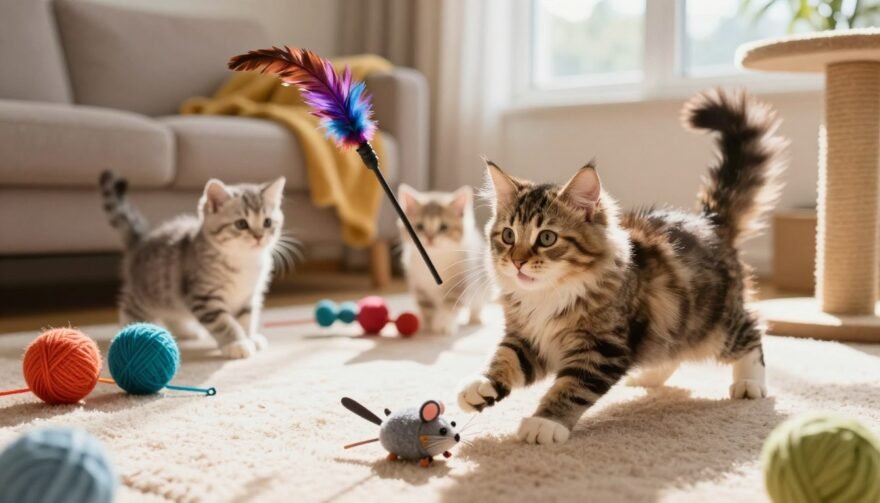
Picture this: I came home after a long day and found my apartment turned into a miniature obstacle course—tufts of fur, a toppled plant, and my cat staring like a tiny zen master who had just invented chaos.
Indoor life means your feline friend leans on you for entertainment. When they don’t get enough stimulation, they start inventing hobbies you won’t love. That’s boredom in plain English: not enough to do, so they improvise.
This short guide promises five easy, low-cost ideas that blend mental challenge and physical exercise. Each idea works in small spaces, fits a busy schedule, and won’t need fancy gear—just a few household items, a couple treats, and a routine you’ll actually keep.
I’ll explain how each play option works, why your cat will go nuts for it, and what to avoid so fun doesn’t turn into a vet bill. Ready for better playtime and fewer shredded curtains? Let’s get your tiny roommate engaged and happy.
Key Takeaways
- Indoor pets need regular mental and physical stimulation.
- Simple, low-cost activities prevent boredom and behavior issues.
- Each idea in the list is apartment- and schedule-friendly.
- Play builds your bond and supports overall feline health.
- No fancy gear required—just a few common items and consistency.
Why boredom happens in indoor cats and why play matters
Indoor routines can turn a curious cat into a bored couch critic pretty fast. Without surprise smells, fresh birds, or alleyway drama, your pet’s brain gets starved for novelty. That’s when mischief slips in.
How mental stimulation and physical exercise work together for feline health
Think of fitness for cats as two parts: move the body and challenge the brain. Physical exercise burns energy and keeps joints nimble.
Mental stimulation trains hunting skills — stalk, chase, pounce, catch — without releasing actual prey in your home. Together they support mood, confidence, and long-term health.
Common boredom triggers for many cats that spend more time indoors
- Long stretches alone and a predictable environment.
- Toys that never change and no window or vertical spots.
- Meals handed out like a cafeteria line (ho-hum).
| Trigger | What it costs | Quick fix |
|---|---|---|
| Alone for long periods | Low social interaction, higher restlessness | Short, frequent play sessions |
| Same toys forever | Less curiosity, more naps | Rotate toys weekly |
| No vertical space | Fewer vantage points for hunting prep | Add shelves or a tall scratching post |
Many cats rely on you for variety. Boredom quietly drains energy over the day, so they nap but stay unsatisfied. When outlets are missing, they invent projects (scratched couches, 3 a.m. concerts).
Good news: you don’t need a lifestyle overhaul. Small, consistent play habits and rotated activities are a great way to solve most boredom problems over time.
Signs your cat is bored and what it can lead to
When your feline starts redecorating with shredded upholstery, boredom is often the culprit. That behavior is rarely random; it’s a hint that your pet needs more mental and physical outlets.
Behavior clues that point to boredom
Look for obvious acts: destructive scratching (especially the “I looked you in the eyes while doing it” move), excessive meowing, and knocking things off shelves.
These are often bids for attention or a hunting outlet, not just mischief. A playing cat may escalate into general “acting out” when normal play is missing.
Health-related red flags
Watch for lethargy that’s flatter than a normal nap, over-grooming, and creeping weight gain. Low activity can start a cycle: less movement → more weight → even less movement.
That cycle harms long-term health and raises obesity risk, joint strain, and anxiety.
- Boredom checklist: destructive behavior, loud or constant vocalizing, lost interest in toys, slow energy, and visible weight changes.
If changes are sudden or severe, contact your vet—boring and unwell can look the same. The easiest way to break the cycle and keep cat minds busy is structured cat play that mimics hunting and rewards effort.
Next up: practical, low-cost ways you can turn restless behavior into healthy movement and real fun.
Games to Keep cats Active with simple, low-cost play
If your apartment feels like a tiny jungle gym for whiskers, here are five easy, cheap play ideas that actually work. These mimic hunting instincts, give mental stimulation, and fit any schedule—no deluxe towers required.
Wand hunting for confidence
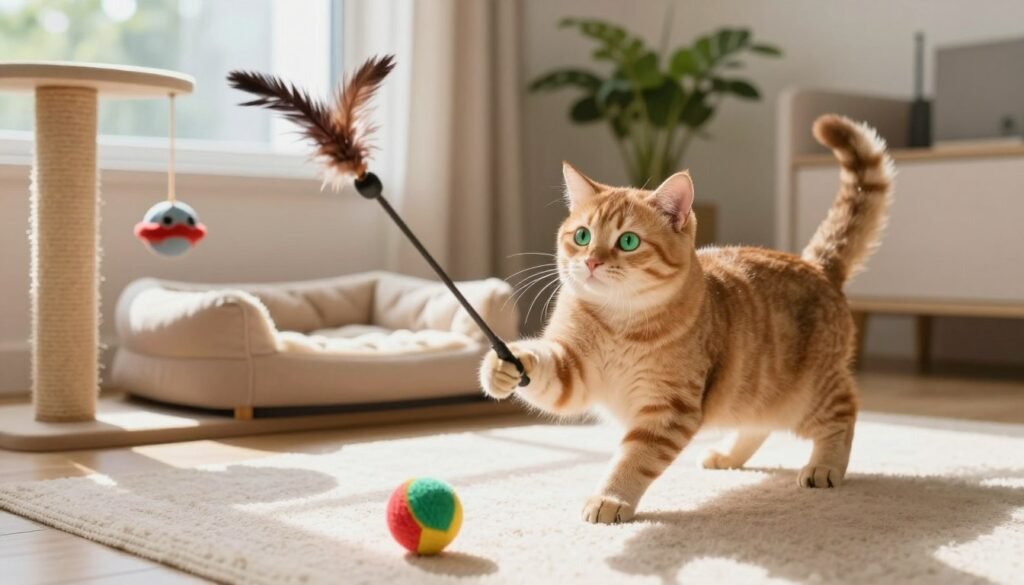
Wand toys with a feather or string are your best “be the prey” tool. Flutter the feather, drag it along the floor, then hide it behind a chair and let your cat pounce.
Tip: Let them catch the toy sometimes. That win builds confidence and keeps playtime fun.
Toss-and-chase kibble
Toss a few pieces of food down a hallway or behind furniture to spark sprinting and quick focus. It turns mealtime into a short, rewarding sprint and slows eating for better health.
DIY treat puzzles and feeders
Make simple puzzles: fold paper towel roll ends around treats, or use a muffin tin and lightweight balls over kibble. Puzzle feeders work well for mental stimulation and pacing food.
Hide-and-seek hunting
Hide small toys or treats around the home and let your cat stalk and explore. Start easy, then increase difficulty like levels in a game—more thrill, less screen time.
Paper bags, boxes, and ping pong balls
Remove handles, supply a box, and add a ping pong ball or lightweight ball for batting. Classic mouse and fish toys also trigger pouncing—rotate them so they feel fresh.
| Game | Main item | Primary benefit |
|---|---|---|
| Wand hunting | Feather wand | Builds confidence, taps prey drive |
| Toss-and-chase kibble | Dry food | Quick bursts of exercise, slows eating |
| DIY puzzles | Muffin tin / rolls | Mental stimulation, foraging practice |
| Hide-and-seek | Toys / treats | Encourages stalking and exploration |
| Household play | Bags, boxes, ping pong ball | Low-cost enrichment and batting fun |
Bonus: A pinch of catnip can revive interest for many felines. Mix these short sessions through the week and playtime becomes a habit, not a one-week honeymoon.
How to run better playtime sessions using toys, treats, and routine
Treat playtime like a mini-workout for your feline friend—short, focused, and intentionally staged. A little planning makes sessions feel purposeful for you and wildly satisfying for your pet.
Best moments and a simple schedule
Secret schedule: cats are crepuscular, so dawn and dusk are prime time. Aim for at least two 15-minute playtime bursts each day.
Adjust by age and energy
Kittens need rapid-fire rounds with short rests. Adult cats like a structured hunt: warm-up, chase, catch, cool-down. Older cats prefer gentler, shorter activity with breaks.
Rotate, hide, and reward
Hide and rotate toys weekly so a toy feels new, not “dead prey in a basket.” Use small cat treats or favorite cat treats as an end-of-session reward.
Sensory boosters and bonding
Feather wands and a pinch of catnip can trigger playful bursts in responsive pets. Consistency makes you the fun friend—your feline friend notices even if they act aloof.
Safety and common mistakes to avoid during cat play
Play should be fun, not the start of an emergency vet visit—here’s how to avoid that drama.
Laser pointers: two simple rules: never shine a beam near eyes, and always finish with a real toy your pet can catch. Shelby Neely, VMD, notes that ending with a tangible reward (laser → wand → treat) prevents frustration and protects emotional health.
String, feather, and wand toy rules
String and feather attachments look harmless but can be swallowed. Susan Bulanda warns: never leave stringy toys unsupervised.
If a toy sheds parts, retire it immediately—don’t debate it. Store wand pieces out of reach when you’re done.
Puzzle feeder hygiene and design
Clean feeders after each use, especially with wet food. Make sure the design has no small, breakable parts that can become choking hazards.
Supervision and home setup
Clear breakables, watch slick floors, and avoid play near unstable furniture. Remember: cats are nimble, but gravity wins.
| Risk | Simple fix | Why it matters |
|---|---|---|
| Laser overuse | End with a catchable toy + treat | Prevents frustration and stress |
| String/loose parts | Supervise and store away | Prevents swallowing and GI injury |
| Dirty feeders | Wash after each use | Reduces bacterial growth, protects food health |
| Unstable play area | Clear obstacles and rugs | Reduces falls and broken items |
Quick reality check: what’s safe for dogs may not be safe for cats. Supervision and simple rules keep play fun and support long-term health.
Conclusion
Boredom in indoor felines often looks dramatic, but the fix can be delightfully simple.
A bored cat can spiral into behavior and health problems. Short, regular play delivers mental stimulation and light exercise that breaks that loop.
Quick roll call: wand hunting, kibble chase, DIY puzzles/feeders, hide-and-seek, and bags/boxes/balls. These games match stalking, chasing, catching, and foraging instincts—your feline’s core hobbies.
Consistency beats perfection. Try a few things, keep what your pet enjoys, and rotate toys. Pick sturdy items, supervise string and feathers, wash feeders, and use lasers responsibly.
Now pick one simple game today, set a timer for five minutes, and watch how fast your feline friend forgives you (and judges you) for everything else.
