

I bought a fancy new post and my cat eyed it like modern art, then proudly claimed the sofa. Sound familiar? I get it—these animals have opinions. They mark territory, sharpen claws, stretch big and sigh with relief after a stressful zoom by the vacuum.
Good news: this behavior is normal and redirectable. Match texture, height, and stability and most cats swap the couch for a proper scratcher.
Research (Wilson et al., 2016) backs this: upright rope or sisal surfaces, 3+ feet tall, with multiple levels and a wide base reduce furniture damage. Place units near beds or favorite loungers.
Make it stick with catnip, short play sessions by the post, and rewards when the right surface gets love. We’re not stopping the urge—we’re giving it a VIP lounge so your furniture stops being the community bulletin board.
Key Takeaways
- Scratching is natural: scent, stretch, and stress relief.
- Choose tall, sturdy, rope/sisal or cardboard surfaces.
- Place near sleeping spots or where damage happens most.
- Use catnip, play, and treats to encourage the switch.
- Data shows upright, multi-level setups cut furniture damage.
Why Cats Scratch and Why It Matters for Your Home
Think of a feline scratch as a three-part routine: advertise, shed, and stretch. It isn’t spite. It’s instinctive behavior that serves clear purposes—and knowing those makes redirection simple.
Territory marking and scent signals
When cats rake a surface they leave a visible mark and a chemical note from glands in their paws. It’s basically their way to say, “I was here,” to other animals (and to you, apparently).
Claw maintenance and grooming
Part of this routine sheds old nail sheaths. That physical grooming is why the action repeats even after treats and coaxing.
Full-body stretch after sleep
After a nap cats extend front legs and pull down. A tall, stable surface lets them stretch fully. Too short and they can’t get the same relief—like trying to do yoga in a cupboard.
Stress relief and self-soothing
Changes at home—new people, new pets, loud appliances—can raise the frequency. Scratching acts as a calming ritual when things feel uncertain.
Bottom line: problem marks are usually normal activity in the wrong spot. Place suitable outlets in living and sleep areas and you’ll stop treating the sofa like it’s cursed.
| Reason | What it does | Home clue |
|---|---|---|
| Territory | Leaves visual and scent signals | Marks in living room or near doors |
| Claw care | Removes old nail sheaths | Frequent repeat behavior |
| Stretching | Full-body muscle extension | After naps, early morning |
| Stress relief | Self-soothing ritual | Increased after household changes |
“Once you understand the why, picking the right outlet suddenly feels logical instead of like a furniture funeral.”
How to Choose a Scratching Post Your Cat Will Use
Before buying anything, play detective: what surface makes them stretch and rake?
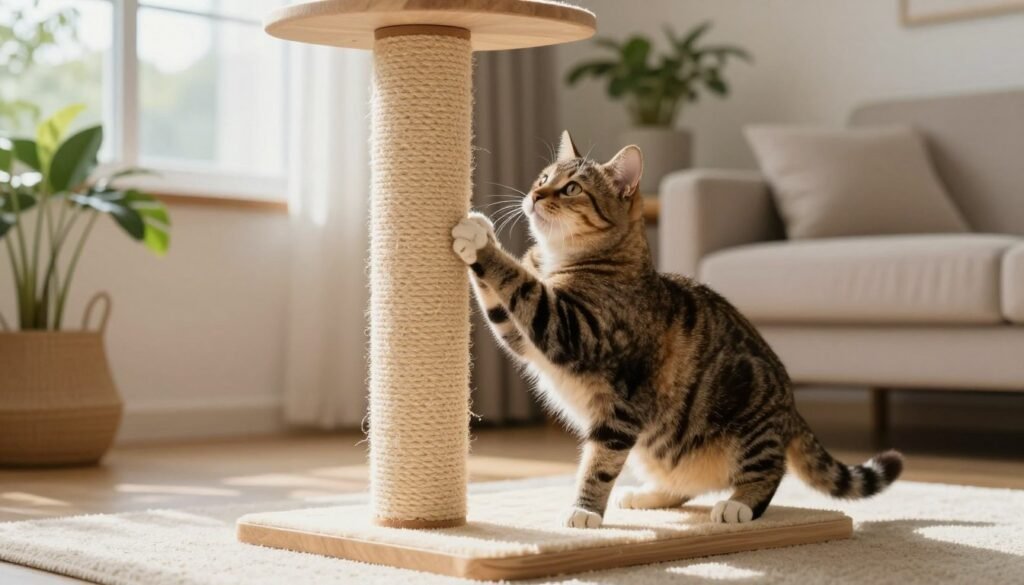
Start with what they already prefer
Watch where claws land most—sofa arm, carpet edge, or a cardboard box. That shows material and angle preferences. Use that clue to pick textures and shapes that match existing habits.
Height and stability matter
Tall is better: aim for about 3 feet or higher so a full stretch is possible. Half-stretches don’t satisfy, and furniture loses.
Sturdy base: a wide, heavy footprint (research suggests 1–3 ft) prevents wobble and builds confidence.
More than one and think multi-level
Multi-level towers add enrichment and repeated use. In multi-pet homes, provide multiple locations so every cat has easy access.
- Ideal post checklist: appealing textures, 3 ft+ height, solid base, multi-level options, and multiple placements around the home.
- Redirect gently: guide paws to the post, reward right after a good session.
| Feature | Why it matters | Data/Recommendation |
|---|---|---|
| Texture | Matches surface they prefer | Rope/sisal often ranks best (Wilson et al., 2016) |
| Height | Allows full stretch and pull-down | 3 ft or higher recommended |
| Base | Prevents tipping, builds trust | Wide/heavy base, 1–3 ft footprint |
| Placement | Increases daily use and redirects furniture marks | Multiple posts in living and sleep areas |
“Give a post the right feel and location, and furniture peace is achievable.”
Best Scratcher Materials and Textures Cats Actually Like
Think of materials as a menu; if you serve what they crave, they’ll take the plate and leave the couch alone.
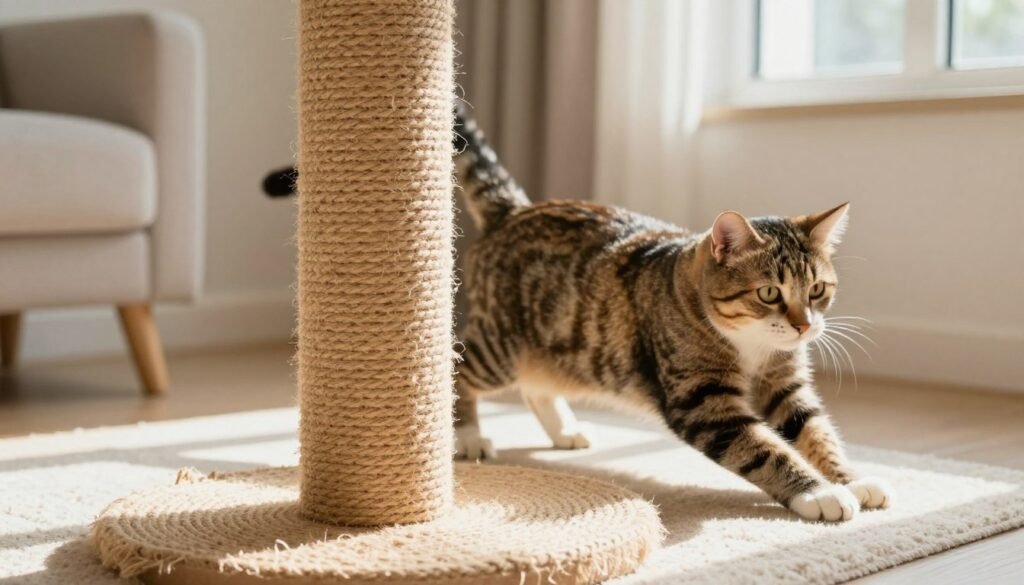
Sisal rope favorites
Sisal wrapped around a post gives tough fibers and a firm grip. That resistance satisfies the full reach-and-pull motion many animals prefer.
Owner surveys link rope/sisal scratchers to less furniture damage. The thready texture wears predictably, so it stays appealing as long as it isn’t frayed through.
Corrugated cardboard for the box lovers
Corrugated cardboard hits the soft‑but‑shreddable sweet spot. Many cats treat boxes like lifestyle accessories, so corrugated pads and loungers get fast adoption.
Sprinkle a little catnip into grooves to boost interest. It’s budget-friendly and easy to replace when compacted or torn.
Carpet, fabric, and wood — when they fit
Some prefer carpet-like feels (survey: carpet commonly provided). Older animals often like softer textures.
Upholstery-style fabric covers mimic sofa fibers for redirecting habits. Wood can work, but choose smooth, sanded surfaces with no splinters.
When to replace worn material
Replace sisal once fibers are threaded through or frayed badly. Swap cardboard when it’s compacted or ripped.
Fresh materials keep the approved option attractive so furniture doesn’t become the new hotness.
- Match the crime scene: if they attack carpet, offer carpet; if they shred boxes, offer cardboard.
- Mix two materials: sisal + cardboard covers most preferences without clutter.
| Material | Why it works | When to replace |
|---|---|---|
| Sisal / rope | Tough fibers, great for pull-down scratches; linked to lower furniture damage | When threads are worn through or frayed |
| Corrugated cardboard | Soft resistance, shreddable, appeals to box-lovers | When grooves are compacted or torn |
| Carpet / fabric | Familiar texture for some, comfy for older animals | When fabric is matted or soiled |
| Wood | Firm surface for harder preferences; safe if smooth | When splinters or rough spots appear |
“Offer the right feel and location, and you’ll outsmart the sofa—no refunds needed.”
Match the Post to Your Cat’s Scratching Style and Preferred Angle
Not every scratcher is guilty of the same crime — angle matters more than aesthetics. You can buy the fanciest unit on Earth, but if the angle your pet prefers is flat and low, that investment becomes fancy furniture. The core idea: watch first, buy second.
Vertical options for upward reach and pull-down motion
Vertical setups suit the full-stretch, reach-and-pull move after naps. Tall, sturdy vertical posts or cat trees (3 ft+ recommended) let the front claws grab and the shoulders extend. FELIWAY notes many animals prefer upright angles for that full-body stretch.
Horizontal pads for floor-level preferences
Some prefer the “front-end-down, butt-up” routine. For that, go with low, heavy floor pads, mats, or corrugated loungers. These mimic carpet or rugs and match that specific scratching behavior so the sofa stops getting the blame.
Angled ramps and box-style options for mixed tastes
Angled ramps and box scratchers blend both geometries. They work for pets that rotate positions or like to cross-train. If the household has indecisive individuals, these are the best compromise.
“Observe the angle your animal favors before you pick a model—geometry beats guessing.”
- Angle problem: match geometry, or the furniture loses.
- Observe for a day or two, then buy the right scratcher and place it near usual spots.
- Once the angle fits, reinforce with play and treats to make it the preferred place.
Where to Place Scratching Posts to Stop Furniture Scratching
Place approved scratch points where morning routines start—it’s easier to reroute a habit than to argue with couches. Think in terms of convenience for the animal and visibility for you. Small changes in location often solve big furniture problems.
Near sleeping areas
Put a post within a few feet of beds and favorite nap zones. FELIWAY notes that many cats stretch and scratch right after waking. If the post is there, they’ll do that ritual on the right surface.
In socially important rooms
They like to mark the rooms where people hang out. Scratching deposits scent from paws, so placing posts in living rooms and kitchens satisfies territory needs and reduces attempts on sofas.
Next to targeted furniture
Place posts within a couple of feet of the damaged item. Temporarily cover the problem spot while reinforcing the new location with toys, catnip, and treats. Reward immediately after a correct session.
Outdoor options for outdoor access
If a cat goes outside, add sturdy yard options like tree stumps or fence posts. Natural substrates let animals scent-mark wider territory and lower indoor pressure.
Multiple approved spots and sightlines
Tip: Provide several posts and a couple of cat trees so every room has an approved scratch zone. Keep them in pathways and near entrances so access is easy. Extra resources reduce stress and multi-animal tension.
“Make placement the secret sauce: the right post in the wrong spot is like putting a gym membership in a drawer.”
- Train with toys near the post, sprinkle catnip on cardboard, and reward quickly.
- Evaluate results over a couple of weeks and move posts slightly if needed.
- Refresh worn surfaces so the approved option stays appealing.
Conclusion
Here’s the short version: redirect instinct with the right tools, placement, and rewards, and peace returns to the couch.
Big truth: cats scratch because they need claw care, stretch, and to mark space. Give a tall, sturdy scratching post (3 ft+, rope or sisal recommended by Wilson et al., 2016) that matches preferred texture and angle.
Offer variety—two or more scratchers in sleep and hangout spots. Reward the moment they choose the approved surface with play or treats; positive reinforcement works fast.
Quick checklist: observe where they scratch today, pick one main post and one alternate, place them near sleep and problem areas, then reinforce for a couple weeks. Do that, and both you and the feline get a happier setup.
